

Water-Activated Tape: The Most Eco-Friendly Choice for Box Sealing
When companies focus on sustainable packaging, they often consider the type of box or filling material. However, one crucial element is frequently overlooked: tape. While plastic tape is commonly used, there are more sustainable alternatives.
The most eco-friendly option? Water-activated tape. Discover why this is the smartest choice!
1. What is Water-Activated Tape?
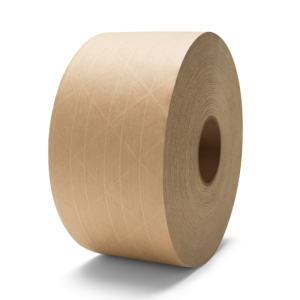
Water-activated tape is both simple and innovative. It consists of a kraft paper backing coated with a plant-based adhesive that activates when exposed to water. This process is triggered using a specialized dispenser that moistens the tape and cuts it to the desired length.
Since the tape is entirely paper-based, it can be easily recycled along with a cardboard box. This simplifies waste sorting and increases the chances of repurposing valuable materials.
2. Five Key Benefits of Water-Activated Tape
Water-activated tape offers much more than just sealing a box. Here are five key advantages:
✅ Strong Adhesion
The tape bonds with the cardboard, creating a strong and secure seal. Often, a single layer is sufficient, reducing tape usage.
✅ Tamper-Resistant
Once applied, the tape leaves visible marks if removed, deterring unauthorized opening.
✅ Sustainable & Recyclable
Made from natural, renewable materials. The adhesive consists of potato starch, while the backing is paper-based, making it fully recyclable along with cardboard.
✅ Aesthetic & Customizable
Seamlessly blending with the box, it offers a clean and professional look. It can also be printed on, making it perfect for branding or informational purposes.
✅ Efficient & Practical
Used with a dispenser, it ensures quick and waste-free application. Plus, it keeps hands clean due to its mess-free adhesive.
3. Why Not Use Plastic Tape?
While some plastic tapes are recyclable, they are still less sustainable than paper-based alternatives. Here are some drawbacks:
❌ Less Eco-Friendly – Difficult to recycle and contributes to plastic waste.
❌ Higher Consumption – Often requires multiple layers for a secure seal.
❌ Weaker Adhesion on Recycled Cardboard – Less effective on rough or dusty surfaces.
4. Choosing the Right Water-Activated Tape
Water-activated tape is available in different options:
- Standard: Ideal for lighter boxes.
- Reinforced: Contains extra fibers for heavier packages and increased tear resistance.
5. The Role of a Dispenser
A dispenser makes using water-activated tape faster and more efficient. Choose from manual, semi-automatic, or electric models based on your needs.
6. Alternative: Self-Adhesive Paper Tape
For those who prefer a tape that doesn’t require water activation, self-adhesive paper tape is a great option. Benefits include:
- More sustainable than plastic tape.
- Writable and printable.
- Moisture-resistant, ideal for shipping.
Although self-adhesive paper tape does not bond as strongly as water-activated tape, it remains a great alternative to plastic tape.
Conclusion: Water-activated tape is a strong, secure, and eco-friendly packaging solution. Make the switch to sustainable tape and reduce your environmental footprint!